Past |
The present |
Future |
|---|---|---|
| I had to work. I had to work. |
I have to work. I have to work. |
I will have to work. I will need to work. |
| I didn't have to work. I didn't have to work. |
I don't have to work. I don't need to work. |
I won't have to work. I won't have to work. |
| Did you have to work? Did you have to work? |
Do you have to work? You need to work? |
Will you have to work? Will you need to work? |
| I will have to work. I will need to work. |
||
| I won't have to work. I won't have to work. |
||
| Will you have to work? Will you need to work? |
||
Statement
Have to in the present tense it changes depending on the character (subject) and number, unlike other modal verbs (should, must and others).
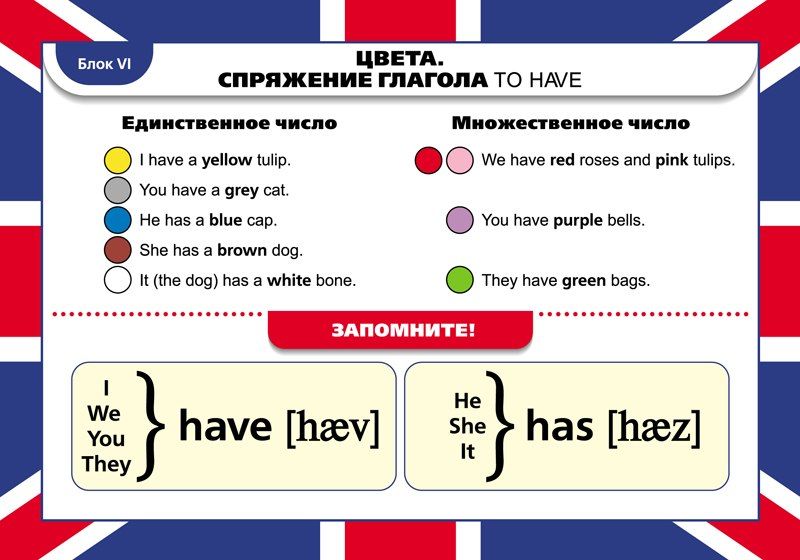
Has– used with third person singular ( He, She, It).
- I have to get up at five every Sunday.– I have to get up at five in the morning every Sunday.
- Ann has to go to hospital.- Ann needs to go to the hospital.
- We have to walk all the way home because we can’t catch a taxi. We have to walk home because we can’t get a taxi.
In the past time have to takes shape had for all persons singular and plural.
- Last summer I had to get up at five every Sunday.– Last summer I had to get up at five in the morning every Sunday.
- We had to walk all the way home because we couldn’t catch a taxi.“We had to walk home because we couldn’t get a taxi.”
- Janice had to visit her dentist last Monday. Janice had to go to her dentist last Monday.
The future tense is formed by the construction will have to for all persons singular and plural. Very rare for top officials I And We used shall have to.
- Next summer I shall have to get up at five every Sunday.– Next summer I will have to get up at five in the morning every Sunday.
- I will be a bit busy tomorrow. I will have to take my dog to the vet.– Tomorrow I will be a little busy. I will have to take my dog to the vet.
- My friends will have to pick me up at 6 p.m.– My friends will need to pick me up at 6 pm.
When forming the passive voice (Passive Voice), the construction is also used have to and passive infinitive.
- You did a great job! You have to be promoted to general manager.– You did a great job! You will need to be promoted to general manager.
- This project has to be approved tomorrow morning.– This project must be approved tomorrow morning.
- His advice has to be taken into account.– His advice should be taken into account.
Negation
Negative sentence with have to in the present and past tense is formed using an auxiliary verb to do in negative form ( don't, does not, did not) or auxiliary verb to be for the future tense ( will not). Such sentences will be translated as " not necessary», « no need», « you don't have to do anything».
- We do not have to be in a hurry. We still have plenty of time.- We don't need to rush. We still have plenty of time.
- You don"t have to wear a suit to work but if you like it you can.– You don't have to wear a suit to work, but if you like, you can do it.
- She didn't have to tell the whole story. We had already heard it.“She didn’t have to tell the whole story.” We've already heard it.
- You won't have to pay for that broken vase.“You won’t have to pay for that broken vase.”
To express a prohibition or a categorical prohibition in the present tense have to always replaced by must in the negative form ( must not).
- You don't have to come here.-You don't have to come here.
- You mustn't come here.- You are not allowed to come here.
- must not = mustn’t
Question
Interrogative sentence with have to formed with an auxiliary verb to do(or will for the future tense), standing in the required form at the beginning of a sentence or after question words ( Who, Why, When, Where, How and others).
- You have to go.- You have to go. (Statement)
- Do you have to go?- You have to go?
- Does Michael have to work on Sunday?– Should Michael work on Sunday?
- When do you have to go there?– When do you need to go there?
- Did he have to call you?– Should he have called you?
- Will I have to pay for the broken vase?– Will I have to pay for the broken vase?
Features of use
Probability Expression
Design have to also expresses probability, certainty, confidence in something of the speaker and is translated as “ there must be», « Maybe", "T in person" In this case have to used only in the present tense (as a construction have to be or has to be) and can be replaced by must .
- I have to be misunderstood.
- I must be misunderstood.“I must have been misunderstood.”
- It has to be really difficult to survive in a desert.
- It must be really difficult to survive in a desert.“Surviving in the desert must be really difficult.”
- That girl has to be Ann.
- That girl must be Ann.“That girl is probably Anne.”
When forming an assumption in a negative form have to is replaced by must in the negative form ( must not).
- That guy has to be Paul.“That guy is probably Paul.”
- No, that mustn't be Paul. Paul is tall and besides, he is blond.- No, it can't be Paul. Paul is tall and also blond.
Have to or Have got to
Often, especially in spoken English, instead of have to you can find a design have got to(as the Present Perfect form of the verb to get). The difference between these designs is practically indistinguishable; they freely replace each other.
The difference is that have to may indicate a repetitive action, and have got to- to the specific, although native speakers themselves rarely distinguish between these constructions. Also have got to used only in the present tense.
- This time we have got to be ready for the battle!– This time we must be ready for battle!
- Oh dear, I have got to do all this work by myself!– Oh no, I have to do all the work alone!
- Matt has got to go right now. Matt has to leave now.
- She has got to be careful after that awful accident.“She must be careful after that terrible incident.”
When forming a question and a negative form, the construction have got to does not need an auxiliary verb to do.
- Have you got to watch your little sister tonight?“Do you have to look after your little sister tonight?”
- Has someone got to take Harry to school today?– Should someone take Harry to school today?
- Why have you got to do this today?– Why do you have to do this today?
- Who has got to do all this work?– Who should do all this work?
- have not = haven’t
- I"m happy I haven’t got to go anywhere today.- I'm glad I don't have to go anywhere today.
- has not = hasn’t
- My mom hasn’t got to take Harry to school today.“My mother doesn’t have to take Harry to school today.”
Got to form
Sometimes have got to can also be simplified to the form got to, especially in modern spoken English. Got to used only to express the present tense. In spoken English the form is also often used gotta(short for got to).
- You can say whatever you want but you still got to work to earn some money for living.“You can say whatever you want, but you still have to work to earn some money to live.”
- I got to help Alice even though I don’t have plenty of time for that.– I have to help Alice, although I don’t have too much time for this.
- I know you want me to stay but, I’m sorry, I really gotta go.“I know you want me to stay, but I’m sorry, I really have to go.”
Have to or Must?
In many cases have to can replace the modal verb must, which also indicates the need to do something.
- Oh, it’s later than I thought. I must go now.
- Oh, it’s later than I thought. I have to go now.- Oh, it's later than I thought. I have to go.
- You must have a passport to go abroad.
- You have to have a passport to go abroad.– You must have a passport to travel abroad.
However, there are certain differences in the use of the design have to and verb must.
Design have to has the forms of present, past ( had to) and future tense ( will have to). The verb must itself is used only in one form and to a greater extent expresses personal decisions, sensations, and feelings.
Must - must, obliged |
Have to - necessary, forced |
|---|---|
| Present | Present |
| I must work. I have to work. |
I have to work. I have to work. |
| Past | Past |
| No | I had to work. I was forced to work. |
| Future | Future |
| No | I will have to work. I will be forced to work. |
I will be forced to work.
- Active Voice
- Peter must leave the city today.– Peter must leave the city today. (the present)
- Peter had to leave the city the next day. Peter was supposed to leave town the next day. (past)
- I must read this book now.– I have to read this book now. (the present)
- I will have to read this book next semester.– I will have to read this book next semester. (future)
- Passive Voice
- It must be done right now!– This must be done now! (the present)
- It had to be done yesterday.- This should have been done yesterday. (past)
Also design have to carries a connotation of the need to do something due to prevailing circumstances, and not of one’s own free will, that is, it can be translated as “ have to», « forced», « must".
- I have to stay at home because my mother asked me to.– I have to stay at home because my mother asked me to. (Must not by choice)
- You have to help your sister because you have promised you would.– You must help your sister because you promised her to do so.
- He can't keep this puppy. He has to give it back to the owner even if he doesn’t want to.“He can’t keep this puppy.” He is obliged to return it to the owner, even if he does not want to do this.
Have or Have to
It is necessary to distinguish between expressions have to do / tell / show something And have something to do / tell / show.
- have as a regular verb
- I have something to tell you.– I want to tell you something.
- have to as modaldesign
- I have to tell you something.– I have to tell you something.
In the first example the verb have used as a regular verb expressing the presence of information or an object that the speaker wants to talk about. In the second sentence have to used as a modal construction and conveys a specific need for action.
- I have something to do this weekend.– I have something to do this weekend.
- I have to do something this weekend.– I have to do something this weekend.
- Jack has something to show to his friend. Jack wants to show his friend something.
- Jack has to show something to his friend. Jack has to show his friend something.
In English text you will often encounter the verb. He needs to be given special attention, since he takes part in the formation of a large number of expressions, phrases and phrases. Most often it is translated into Russian as have, have. But the direct meaning can be changed depending on how the verb is combined with other words.
The functional feature of the verb to have is that it can be presented as a full-meaning semantic (expresses the meaning of an action or state independently, has a full semantic load), an auxiliary (auxiliary, used in a sentence together with a semantic verb) or a modal verb (conveys the attitude to the action , used with semantic verbs).
To have as a full verb
In this form, “to have” is translated into Russian as “to have”, “to own”, “to possess”.
For example:
- I have a delicious chicken– I have a delicious cutlet (I have a delicious cutlet).
Examples:
- I have a bright shawl– I have a bright scarf (I have a bright scarf, I have a bright scarf).
- She has a pen– she has a handle (she has a handle, she has a handle).
In British English, when using have as an independent verb, have got, has got is often used. However, the meaning does not change.
Examples:
This type of sentence is formed using an auxiliary word.
Examples:
- Did he have a black hat?– Did he have a black hat (did he have a black hat)?
- Did they have glasses?– Did they have glasses (did they have glasses)?
Negative (denial)
A negative sentence is formed using the auxiliary word did and the negative particle not.
| I | didn't (didn't) | have |
| He | ||
| She | ||
| It | ||
| We | ||
| You | ||
| They |
Examples:
- She did not have a market tent– she didn’t have a market stall (she didn’t have a market stall).
- We didn't have credit cards– we didn’t have credit cards (we didn’t have credit cards).
Future Simple (future tense)
Affirmative
When forming an affirmative sentence, an auxiliary word is used.
Examples:

Interrogative (interrogative form)
Formed by placing will in first place.
| I | have | |
| Will | he | |
| she | ||
| it | ||
| we | ||
| Will | you | |
| they |
Examples:
- Will I have a camera?– Will I have a camera (will I have a camera)?
- Will he have a ball or designer?– Will he have a ball or a construction set (will he have a ball or a construction set)?
Negative (denial)
A negative sentence is formed using the auxiliary verb will and the negative particle not.
| I | have | |
| He | will not (won't) | |
| She | ||
| It | ||
| We | ||
| You | will not (won't) | |
| They |
Examples:
- She will not have glass beads– she will not have glass beads (she will not have glass beads).
- We shan’t have wood floor– we will not have a wooden floor (we will not have a wooden floor).
To have as an auxiliary verb
 In this form, to have is used when forming perfect tense forms with all verbs, excluding modal ones.
Its conjugation is the same as in the full-valued form.
Example:
I have done it easily - did it easily.
To have as a modal verb
How to have is used with a full verb in an indefinite form and is used in situations where it is necessary to perform an action caused by circumstances, or has the form of advice or recommendation. Its conjugation is the same as in the full-valued form.
Examples:
- We have to have a talk– we need to talk.
- You have to add the flour– you need to add flour.
Verb " to have" (to own) in English is used in quite different situations and can be translated into Russian in different ways. In this article you will learn the main situations when this verb is used. You will also learn about the verb " have got", which also means "to own".
Verb to have
- To have is a main verb used to indicate possession (ownership) of something (not only material), properties of something (or its characteristics), kinship or connection, for example, the quality of one thing in relation to another:
I have a cat. → U Eat me cat.
I have a lot of free time these days. → Now at Eat me) a lot of free time.Dmitry has a sister in France. → At Dmitry's There is sister in France.
He has three books by Hemingway. → He It has/U he has it three books by Hemingway.
She has fair hair → She has blonde hair.
- Verb " to have" is also used to denote a large number of actions, here are some of them (the main thing is to understand the meaning, not to be scared and think “how to translate this”):
have a bath, wash, shower, etc → take a bath (lie in it), do laundry, take a shower (under running water), etc.
have → have breakfast, lunch, dinner.have fun → have a good time, “have fun.”
have time available → to have time for something.have questions → have a question.
have a party → hold a party.have a walk, hike, ride, etc. → take a walk, go on a hike, ride a horse, etc.
have a discussion, fight, argument etc. → discuss, fight, assert...
Examples:
I usually have breakfast at seven o'clock. → Usually, I I'm having breakfast at seven o'clock.
Anna is having a bath at the moment (time). → Anna now taking a bath.
- Used as . It can be easily identified by its design" have to". Here it expresses a requirement to perform some routine action (but not always). It is often used by native speakers as an action that carries responsibility, duty .
This form" have"also has a similar meaning to the modal verb" must" - when talking about responsibilities, native speakers prefer to use it (for example: I must talk to Peter. It’s important)."
Verb " must" used when they want to talk about very serious for the speaker(or if they are considered to be such) duties (for example: I must feed my family).
A few examples:
They have to work hard on Saturdays (routine for them). → On Saturdays they must Hard to work.
I have to return books to the school library. → I must return books to the school library.I must be rich (very important for the speaker). → I must to be rich.
I must to defend my homeland. → I must defend your homeland.
Verb have got
- The verb "have got" is more characteristic of British English. It also serves to indicate possession (ownership) of something (not only material), properties of something (or its characteristics), kinship or connection. For example:
He has got some friends in London. → He has a few friends in London
Anna has got three sisters → Anna has three sisters.
I have got a new car. → I have new car.
Americans also sometimes use " have got"but more often" gotten" or simply " (to) have"(consider it an analogue/synonym - it's easier this way).
I had a copy of that book. (). → I had a copy of that book.
I have got a copy of that book. (). → I have a copy of that book.
- The penultimate significant difference is the reduction. Verb " have" has no abbreviations; for example, you can't say "I've a red bicycle" just "I have a red bicycle". And here is " have got" on the contrary, has contractions (in affirmation and negation):
I' we got a red bicycle (I have got a red bicycle). → I have Red bicycle.
She hasn't got a dog (she has not got a dog). → She has no dog.
- And the last main difference, where confusion often arises, is the negative and interrogative constructions of these two verbs.
You can understand these differences in the picture below. I'll just say that " have got" does not need help (in this case, “do”, since let me remind you that “have got” is used in the Present Simple)

Most often it is translated into Russian as having, possessing. But the direct meaning can be changed depending on how the verb is combined with other words.
Verb have/has can be used as a semantic, auxiliary or modal verb.
But in any case, the rules for using have or has are the same.
Has used with 3rd person singular pronouns: he, she, it.
Have used with all other pronouns - I, you, we, they.
I have classes three times a week.
We don't have frequent visitors.
Does he drink tea every evening? No.
Where do you have visitors?
Form had is the same for all pronouns.
Besides the verb to have, in English there is a construction have got with the same meaning - to have. The difference between them is stylistic and grammatical. The stylistic difference is slight - have got used primarily in spoken and written speech, and To Have in the official one.
I have a car.
He doesn't have a wife.
She has a child? Yes.
What do you have?
Verb have got and has got in English
What to use correctly in a question:
Is or does, are or do?
In order to pose a question in English, in most cases you need to use either a verb to be(in forms am, is or are), or verb to do (does- for a third party). Let's figure out how not to make a mistake in choosing.
1. Action
If present verb => use an auxiliary verb to do (does).
2. Condition
If the sentence expresses "state" => the appropriate form of the verb is used to be.
Understanding the rule is not enough. It is necessary to develop automaticity in using the correct verb. This free training exercise will help you with this (additional exercises increase in difficulty).
There are 16 spoken phrases in the exercise:
- in the first block - choose the option that exactly matches the spoken phrase;
- in the second block - write the same phrases from dictation.
- Add. exercise 2 - choose verb from the suggested options)
- Add. exercise (3 - enter verb)
- Add. exercise (4 - write phrases in English with dictation)
- I have a delicious cake - I have a delicious pie.
- He has a new car - he has a new car.
- I have got a funny rabbit - I have a funny rabbit.
- He has got a small kitten - he has a small kitten.
- We have to see him right now - we need to see him right now.
- You have to add some sugar - you need to add some sugar.
- act as a semantic verb
In principle, we have already seen in the examples above do as a semantic verb (i.e., the verb on which the main meaning of the sentence lies). Here are a few more examples: - be an auxiliary verb(to form an interrogative or negative sentence)
- I have a car.
- I have a car. - I have a car.
- There is a picture on the wall. - There is a picture hanging on the wall.
- He has a picture- He has a picture.
- I've got
- He's got
- She's got
- I have a question. - I "ve got a question.- I have a question.
- You have a car - You "ve got a car- Do you have a car.
- He has a hundred rubles - He "s got a hundred rubles- He has 100 rubles.
- She has a lot of friends - She "s got a lot of friends- She has a lot of friends.
- We have little time- We have little time.
- You have a lot of money- We have little time.
- We have no money - We have not got any money- We do not have money.
- They have no questions- They have no questions.
- You have no computer - You have not got a computer- You don't have a computer.
- He has no friends- He has no friends.
- Do you have a car?- Do you have a car?
- Have you got a car?- Do you have a car?
- Has she got a computer?- Does she have a computer?
- Have you got a ticket?- Do you have a ticket?
- Have they got any children?- They have children?
- Have you got any time?- Do you have time? (for some time)
- What have I got here?- What do I have here?
- What car has he got?- What kind of car does he have?
- How much time have you got?- How much time do you have?
Listen and repeat OUT LOUD English phrases to the speaker. Translation of phrases into Russian is given after completing each task (phrase).
english.prolingvo.info
Verb to have: meaning and rules of use
When taking your first steps in learning English, you will definitely come across the verb to have. This verb has several functions and is an integral part of a huge number of expressions, phrases and phrases. Its first meaning is “to have”, “to possess”, “to possess”. But a word can change its meaning when used in combination with other lexical units. We will start with a simple one and look at two forms of the verb - have/has, the rules for their use and figure out how the verb to have and the verb have got differ from each other.
Lexical meaning of the verb to have
The main meaning of the word, as noted above, is “to have”, “to own”, however, when translating into Russian, the structure “(someone) has” is more often used.
In this meaning, the verb can be replaced by the alternative construction have got with the same meaning.
Both the separate verb and the construction have got are used when it comes to owning something, in particular about family ties and diseases.
In some set expressions (have a look, have breakfast, have a rest, etc.) the word got is not used.
Also, the verb to have changes its semantic meaning when it acts as a modal verb.
Grammatical forms of the verb to have
As you'll notice, the examples above alternate between two forms. So, when is it written have, and when has?
The form have in English is used with the pronouns I, you, we, they (I, you, you, we, they), has - only with the pronouns he, she, it (he, she, it). But this rule does not apply in all tenses: in the future tense (Future Simple), after the auxiliary verb will, have is placed in all persons.
Do and Does in English
When we first encounter verbs in English, each of us has certain difficulties with their conjugation. Just in case, let me remind you that conjugation is changing the verb according to persons, numbers and tenses. We conjugate Russian verbs without thinking.
For example, the verb "to see"
We are not at all confused by the fact that in the first person (I), the root vowel changes from d to z. We are used to this, and we also need to get used to some of the peculiarities of the conjugation of English verbs.
In this article we will talk about the verb to do(do, perform an action).
As you may have guessed, do and does are forms of the verb to do in the Present Simple (i.e., simple present).
Rule very simple:
in the 1st person singular and plural (I, we), as well as in the second and third person plural (you, they) → DO
in the third person singular (she/he/it) → DOES
The conjugation of the verb to do is presented more clearly in the table.
Let's look at a few sentences with the verb do:
I do teaching for a living. (I teach for a living.)
We do our job with pleasure. (We are happy to do our job.)
You do the same thing every week. Why? (You do the same thing every week. Why?)
They do a lot of different things in their free time. (They do a lot of different things in their free time.)
And sentences with the verb does:
He doesn't exercises every morning. (He does exercises every morning.)
She does her shopping every Wednesday. (She shops every Wednesday.)
We have a multi cooker. It does most of the cooking for us. (We have a slow cooker. It mainly cooks our food.)
In general, this rule does not contradict the basic way of conjugating verbs in English. Usually we add to the verb in the third person singular Present Simple - s.
I sit - He sit s (I am sitting - He is sitting)
We live in Moscow - She lives s in New York. (We live in Moscow - She lives in New York)
The same thing happens with do, only we add - es: I do -He do es
.
The same model is used to form the corresponding form of the verb to go (I go - He go es
).
Naturally, the subject is not only pronouns (I/you/he, etc.), but also nouns (both proper and common nouns). If in doubt, mentally replace the noun with a pronoun.
Mary does the cooking (Mary cooks the food). She does the cooking (She prepares food).
Mary and Kate do the shopping together (Mary and Kate go shopping together). They do the shopping together (They go shopping together).
Zoe likes to sing . She does it whenever she can. (Zoe loves to sing. She does it whenever she can)
Peter and Jack clean their room on Fridays . They do it every week. (Peter and Jack clean the room on Fridays. They do this every week.)
Why is it important to learn verb conjugations? to do?
The verb to do is a significant verb. It will be easier for you to move forward in learning English if, after your first encounter with the verb do, you learn (or remember) its conjugation in the simple present.
Could you do me a favor please? (Please do me a favor).
He doesn't his homework every day. (Jy does his homework every day.)
In my family my mother does the cleaning. (In my family, my mother does the cleaning.)
An auxiliary verb is a verb that does not carry a semantic load, but is needed to construct a grammatically correct construction.
In English, in the Present Simple (and Past Simple), a general question (i.e. a question whose answer is yes or no), as well as a negative sentence, are formed using the verb to do.
Question =do/does+subject +
predicate (semantic verb)
Do they work hard? - Yes, they do. (Do they work a lot? – Yes.)
Do I know him? -
Does he watch TV every night? – No, he doesn’t. (Does he watch TV every evening? – No.)
Does Mary eat apples? (Is Mary eating apples?)
The choice of verb form, do or does, depends on the subject: with I, We, You, They - D.O.
with He, She, It - DOES
Negation =
subject + do not (don’t)/does not (doesn’t) + predicate (semantic verb)
I don't(don’t) eat cakes. (I don't eat cakes).
We don't like this film. (We didn't like this movie).
Peter and Mary don't want to go there. (Peter and Mary don't want to go there).
She doesn't play tennis (She doesn't play tennis).
Peter doesn't live in Paris. (Peter does not live in Paris).
The choice of verb form, do or does, also depends on the subject: with I, We, You, They - DO NOT (DON'T), with He, She, It - DOES (DOESN'T)
*Don’t / doesn’t – shortened forms of do not/does not, used in informal correspondence, as well as in the transmission of colloquial speech.
NB: Pay attention to cases when the verb do acts both as a semantic verb and as an auxiliary verb.
I don’
t do it. (I this Not I do).
He doesn't’
t do it. (I this Not does).
The underlined verb is an auxiliary verb (thanks to it we formed the negative
sentence), highlighted in bold – semantic. If in question or negation in
When do is used as a semantic verb, it is always in the do form.
Wed. I don't do it. (I this Not I do).
I don’
t like it. (I this Not I love).
She doesn't do the shopping. (She Not does purchases).
It doesn't do him credit. (This Not does honor to him).
The situation is similar with interrogative sentences.
What do you do? (What do you do?/What do you do?)
What does he do? (What does he do?)
3) serve as a verb –
substitute
To avoid tautology, the verb mentioned in the previous sentence can be
replace with the verb do.
Jane eats apples. She does it every day. (Jane eating apples. She does this is every day).
They work at hospital. They do it's for free. (They work in hospital. They do This
4) emphasize or highlight what action
In some cases, you need to highlight the meaning of the verb. Sometimes this is done using the verb do. The rules for using do and does in this case remain the same, and the semantic verb does not change.
They do want to help you. (They really want can I help you).
He does need this job. (To him desperately needed this job).
Using have has in English
So what's special about use of have has in English? First, it is important to pay attention to which subject is in your sentence. It is from this moment that it depends which form of the verb needs to be used. According to grammatical rules, has only friends with he, she, it; A have- with all other persons and numbers.

Secondly, do not forget that in addition to statements, there are also questions with denials. Today it is acceptable to simply add in negation not to the corresponding verb form to have, and for a question, put the same form in front of the subject who has something in your sentence. You can also ask for help from do And does. For negatives with he, she, it will do doesn't, and for everyone else - don't. In a question, take out do or does(For he, she, it) in front of the subject.
In other words, using have has in English it is practically no different from other verbs in the present tense. It is only important to remember that there is a form has .
Using have in English with examples
Like all other rules, use of have in English It's better to remember with examples. This is what we will do right now!
Verb to have- have, is the second most important verb in the English language, second only to the verb to be. The fact is that the British and Americans say the word " have"much more often than Russians say the word "have".
For example, in Russian we say:
And when we want to say that someone has something, we say "he has" - "he has"
Speak in first person and plural person "have", and in the third person singular "has". As you can see, the verb has only two forms "to have" in present time: have And has. We say: I have - I have , translate: I have.
In colloquial speech in place have often said have got, literally got it, got it, started it. That is, instead of - I have, They say: I have got. Instead of has They say has got. That is, instead of - he has, They say: he has got. Moreover, in fluent speech from the word have only one sound remains "ve, and from the word has one sound "s.
If something is missing, then we put it no before a noun.
Before a plural noun or before an uncountable noun put any- any time.
How many?- They ask about what can be counted.